

Abdul Ghaffar Bugti
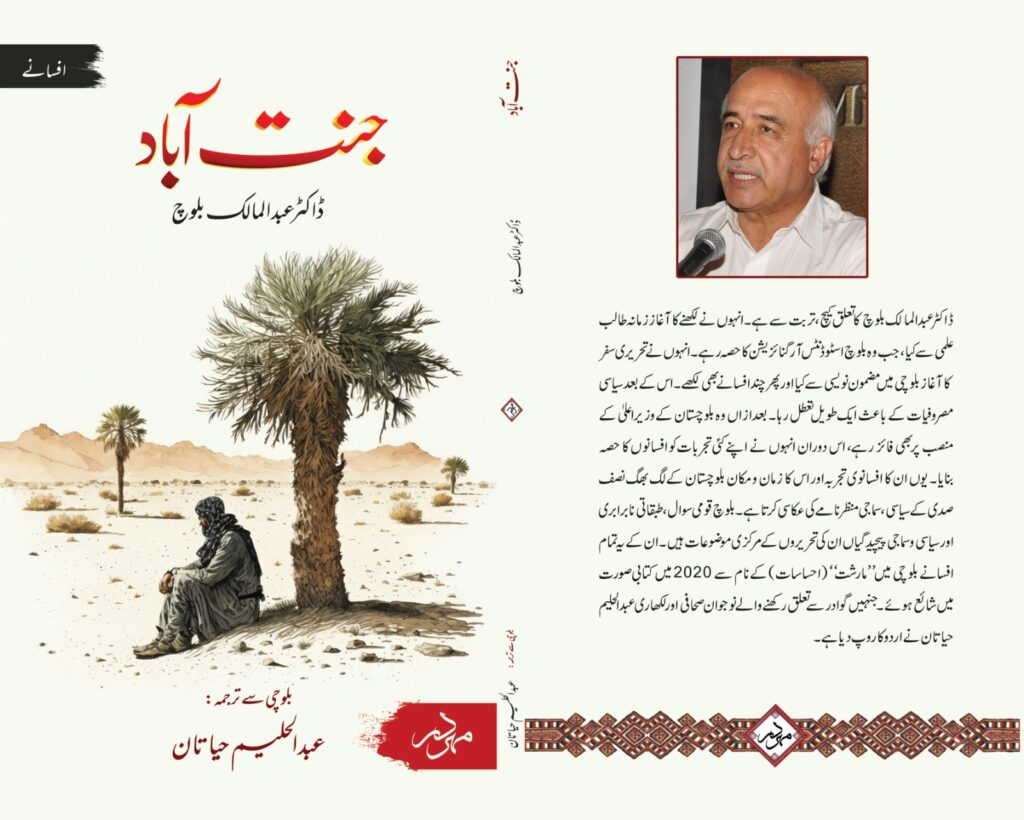
Nearly two years ago, Dr. Malik Baloch handed me this book at a ceremony. At the time—immersed in an English degree—I hardly had the chance to explore Urdu literature. But recently, as I returned to Urdu reading, Jannat Abad resurfaced before me. From the very first pages, it felt less like fiction and more like opening today’s newspaper from Balochistan—except the stories inside stretch across decades. It reads as if the province’s political and social journey has been captured not by a journalist, but through the lived voice of a political worker.
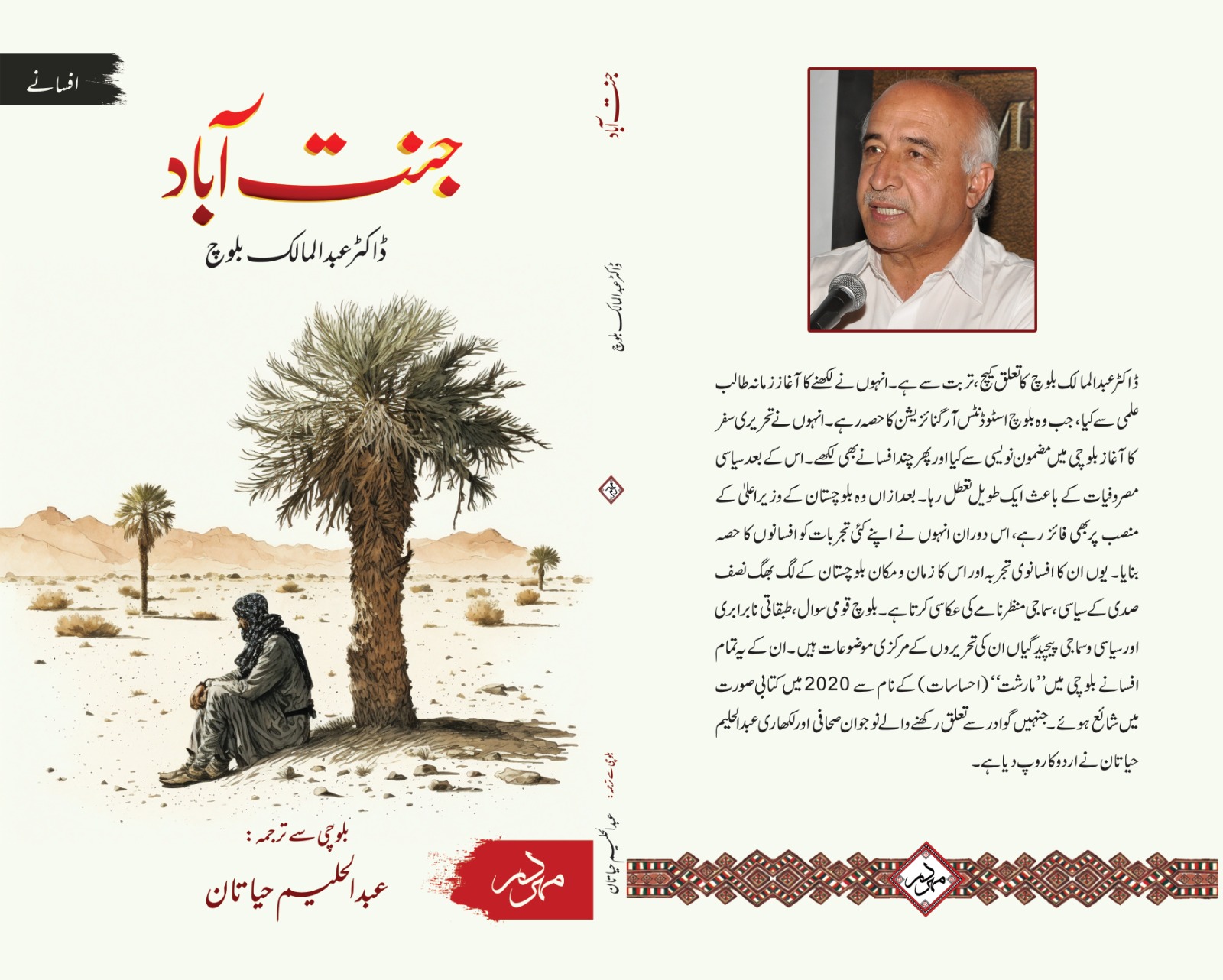
Although the book carries the label “Short Stories,” indicating fictional narratives built around characters and incidents, I found Jannat Abad far closer to real life than fiction. The events, emotions, and characters felt authentic—only their names seemed altered, and literary language was woven in to enrich the storytelling. It appeared that Dr. Malik’s long political life, knowingly or unknowingly, shaped the core themes of these stories, embedding within them fragments of autobiography.
Before sharing one such story that mirrors today’s political landscape of Balochistan, a few words about the author: The writer of Jannat Abad is none other than the renowned Dr. Abdul Malik Baloch, former Chief Minister of Balochistan and chairman of the National Party. A lifetime spent in the politics of Balochistan, and years of engagement with issues of peace and governance, have deeply informed his writing.
Dr. Malik began writing during his student days, when he was a member of the Baloch Students Organization. He first wrote essays in Balochi, later crafting a few short stories. Then political life consumed his time, and he did not write for many years. It was only during his tenure as Chief Minister that he documented many of his experiences in literary form. Thus, the stories he produced reflect nearly half a century of Balochistan’s political and social landscape—marked by the Baloch national question, class inequality, and complex political realities.
These stories were first published in Balochi under the title Marsht (Feelings) in 2020. The Urdu translation, titled Jannat Abad, was produced by young writer Abdul Haleem Hayatan from Gwadar and published by Mehrdar. One of its stories, Gardish-e-Dauran (The Turns of Time), strikingly mirrors contemporary Balochistan—capturing how both the state and the revolutionary armed movement have severed the social ties of ordinary political workers, leaving common people trapped between two dominant and unforgiving narratives: the state’s narrative and the separatist narrative.
The story begins with Dad Shah, whose village lies deep in the foothills of a mountain range. His family has lived there for centuries. After excelling in school, he moves to the city to study and later becomes active in student politics. His ideological clarity, intellect, and commitment lead him to become a respected organizer.
After completing his master’s degree, Dad Shah steps fully into political life. He helps organize a national party rooted in an anti-tribal, anti-feudal, and anti-capitalist framework. The party attracts students, poets, intellectuals, and workers—people disillusioned with the exploitative politics of sardars and nawabs. Dad Shah, humble and selfless, never seeks power or office. His moral character earns him respect as a political mentor.
But soon, a wave of revolutionary and armed thought sweeps the region. Decades of deprivation and national oppression push many—writers, teachers, lawyers, and youth—toward the idea of armed resistance. Anyone opposing this narrative is branded a traitor deserving death.
Violence intensifies: bomb blasts, school closures, attacks on state interests, killings of teachers and laborers. Many of Dad Shah’s own comrades abandon democratic struggle and shift toward militancy, declaring their former party “traitors” who must be eliminated.
Dad Shah and his companions, seasoned political minds, analyze the situation carefully. They agree on the dream of freedom but believe that without an inclusive national party capable of uniting people and gaining international legitimacy, such a struggle cannot succeed. They fear the outcome will be devastating—loss of young lives, displacement, destruction of education, and long-term instability.
Their fears come true. Dead bodies begin appearing in streams and barren lands. Enforced disappearances rise. A parallel militia emerges, empowered to abduct and kill with impunity. The region descends into terror, and the armed movement, weakened by state repression, begins targeting political rivals instead.
Dad Shah becomes their first victim.
His martyrdom plunges the community into grief. People knew his integrity, sacrifice, and lifelong commitment to human dignity. His earlier prediction— “A day will come when the powerful will crush the armed men, and in their rage, they will target people like us—the political workers”—proved tragically accurate.
In my view, Jannat Abad is essential reading for anyone seeking to understand the political realities of today’s Balochistan.
Abdul Ghaffar Bugti
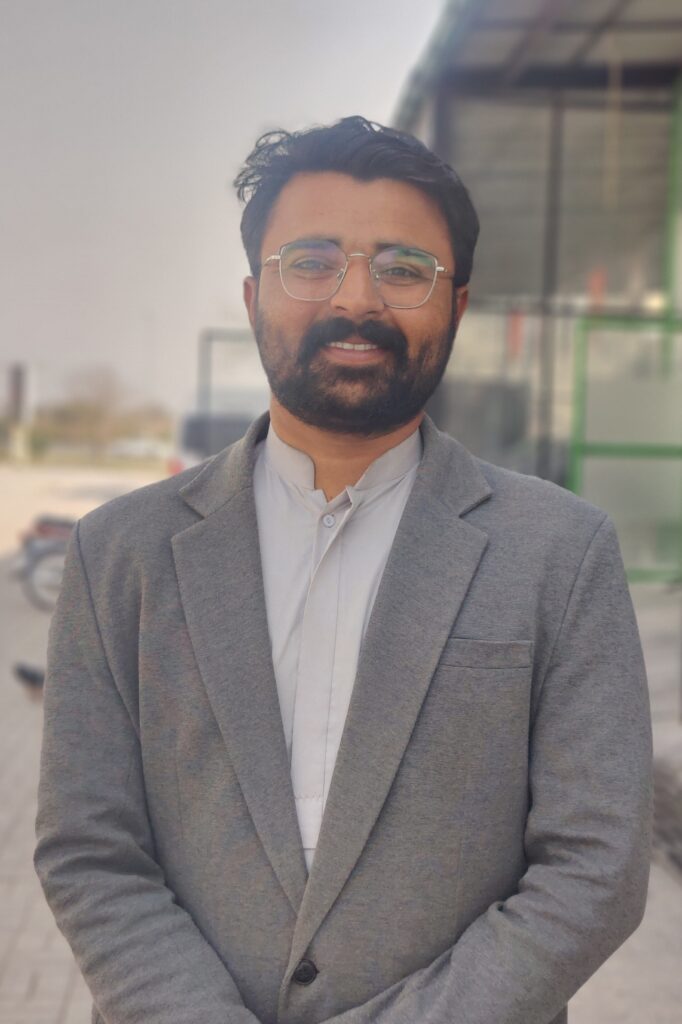
Abdul Ghaffar Bugti, a social activist and writer from Balochistan, regularly comments on socio-political developments and issues impacting vulnerable communities.
Leave a Reply